Future of Education
Designing the Future of Schooling: Lessons from Dr. Ryan Persaud
Hatem Radwan
2025-12-04 · 5 min read
Inspired by EdTALK Coffee with Dr. Ryan Persaud, Head of School at VERSO International School (Bangkok)
Introduction — A Leader Who Has Lived the World Through Schools
When Dr. Ryan Persaud speaks about school transformation, he speaks from experience — not theory. His career has unfolded across continents: South Korea → Canada → Korea again → Brazil → now Thailand.
This global journey has shaped his leadership philosophy in a profound way: schools must be built around people, culture, and context — not tradition.
During our EdTALK Coffee session, he described himself first as a father, then a leader — a reminder that at the center of every great educator is a human being who understands life, growth, and purpose.
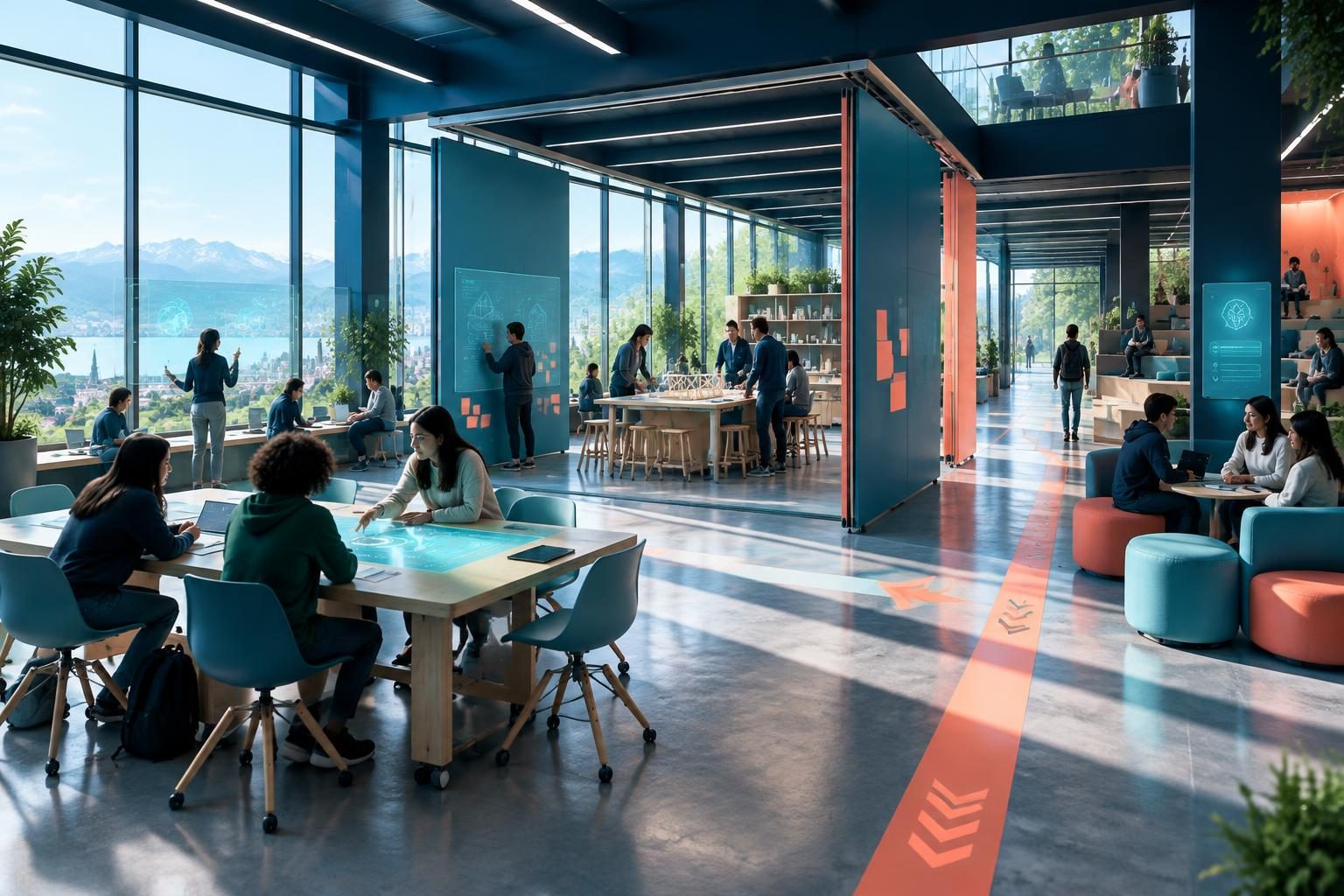
From this foundation, he has helped lead one of the most innovative and talked-about international schools in the region: VERSO International School, a design-thinking-driven, interdisciplinary learning ecosystem where "teachers" are reimagined as Learning Designers and students learn in circular, flexible, open spaces designed for collaboration and creativity.
1. What International Experience Teaches a Leader
When moving across cultures — Korean, Canadian, Brazilian, Thai — Dr. Ryan learned the most important rule of leadership:
"You cannot take what worked in one country and apply it blindly in another."
Every culture has norms, communication styles, expectations, and social structures that shape schooling. To lead effectively, you must observe first, understand deeply, and act humbly.
This mindset is what allowed him to transition from system to system without imposing, but rather co-creating.
2. "Schooling Done With Students, Not To Students"
"Schooling is still being done to students, rather than students being in a symbiotic relationship with the school."
This is the mindset VERSO was designed to challenge.
VERSO's founders visited 25 global schools and collaborated with IDEO (San Francisco) to embed design thinking at the heart of the school's DNA.
From building circular school structures to flexible learning environments, everything at VERSO was built around one question:
How do we design a school where students co-create learning, rather than receive it passively?
3. Learning Designers, Not Teachers
"We call our teachers Learning Designers."
Why? Because their role is not to deliver content — it is to design learning experiences rooted in collaboration, problem solving, interdisciplinary exploration, self-directed learning, and real-world application.
This shift changes everything: the mindset, the planning, the way classrooms are used, and the relationship between teacher and student.
4. A School Physically Designed for Creativity
VERSO's building is unlike anything we see in traditional education: circular layouts, open flexible spaces, movable furniture, writable walls and desks, multi-zone learning areas.
The physical architecture communicates a learning philosophy: Movement, flexibility, collaboration, creativity.
5. The Power of Interdisciplinary Learning (Learning Labs)
VERSO integrates interdisciplinary Learning Labs at every level: students engage in quarterly, year-long projects; authentic interdisciplinary challenges; blended skills (STEM, humanities, arts, digital learning); real-world problems and design thinking cycles.
By Grade 12, students lead a full-year "Vertex Project," supported by an advisor — an experience designed to reflect real work, not school work.
6. What Does a School Day Look Like? A Window Inside VERSO
Dr. Ryan walks the school every week. Inside classrooms, he sees students writing in corners, on carpets, on beanbags; coding sessions where students proudly showcase work; math classes using walls and desks as canvases; Play-Doh, Lego, storytelling circles; students exploring interdisciplinary challenges.
Some students adapt immediately. Others, especially those coming from rigid traditional schools, need support — and that's okay.
7. Preparing Students for a World of Uncertainty
Universities already accept VERSO graduates — University of Toronto, Boston College, UK institutions, Netherlands — but Dr. Ryan stresses something deeper:
Success isn't only university acceptance — Success is skill readiness.
VERSO uses competency-based learning, descriptive feedback instead of grades, OECD 2030 Future Skills, and integrated standards.
Students learn collaboration, communication, creativity, adaptability, problem-solving, and independence.
8. How VERSO Balances Innovation with Reality
Innovation must meet practicality. Schools still need schedules; students still need math, English, and standards; parents still need structure; markets still require accreditation and pathways.
VERSO created a hybrid model:
- Mon / Tue / Thu / Fri → subject-based learning
- Wednesday → interdisciplinary Learning Labs
This balance protects academic rigor while enabling creativity.
9. Does AI Belong in Schools? "Yes — If Used With Purpose."
"AI is an opportunity — but age-appropriate, well taught, and ethically introduced."
His principles mirror global best practice: no forced AI adoption, no chasing trends, thoughtful piloting, clear purpose and justification, parent education sessions, strong vetting of AI tools, small trials before large rollouts.
AI must serve learning, not dominate it. And schools must ask why before how.
10. How Traditional Schools Can Begin Transforming
A practical roadmap for schools seeking change:
- Start with the learner. Understand student experiences and outcomes.
- Backward-design the system. Identify what's missing in learning experience.
- Build a multi-year vision and strategy. Ground it in data.
- Invest in teacher capacity. Skills before systems; clarity before change.
- Start slow. Transformation requires pacing, not pressure.
- Visit schools that are doing it well. School visits are the best form of professional development.
Conclusion — A Call for Courage
Dr. Ryan's final message is one of courage. Transformation is not easy. It requires leaders who are willing to challenge assumptions, listen to their communities, and design with empathy.
But as VERSO shows, it is possible. And it is essential.
Keep reading
Advancing Responsible AI Integration in Education: EdTALK Series
In today's rapidly evolving educational landscape, the responsible integration of AI has become a crucial topic of discussion. To facilitate this conversation, a global initiative known as EdTALK has emerged, powered…
Innovations in Education: 15 Minutes With Thought Leaders
In the ever-evolving landscape of education, the integration of AI has become a significant focus for educators, policymakers, and industry leaders alike. A new global initiative, led by NDX, is set to revolutionize t…
Global Think Tank on AI in Education: EdTALK Insights
In the realm of education, the integration of artificial intelligence (AI) has become a topic of significant interest and discussion. Imagine a platform that brings together educators, policymakers, school leaders, re…